

A strong organisational culture is one of the most effective safeguards against sexual misconduct.
While organisations rightly focus on policies, procedures and investigation processes, preventing harm also requires sustained attention to the everyday culture people experience within an organisation. Culture shapes whether individuals feel psychologically safe, whether inappropriate behaviour is recognised and challenged early, and whether people trust that concerns will be handled appropriately.
LimeCulture was pleased to contribute to the Professional Standards Authority webinar series on tackling and preventing sexual misconduct, focusing on the critical role that safer cultures play in preventing harm before it occurs.
As Kerrie Best, Director of Consultancy and Training at LimeCulture, explains:
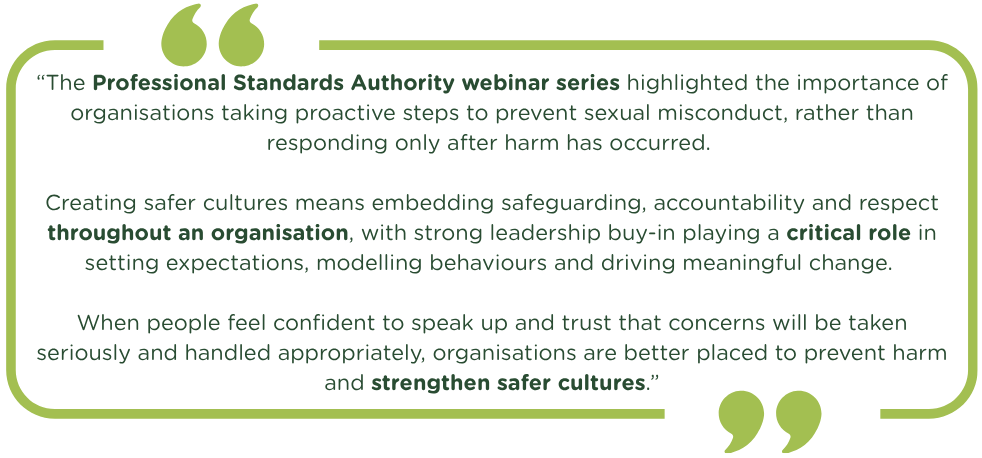
Creating and sustaining a safer culture requires organisations to take a holistic and embedded approach. At the centre of this is strong leadership. Leaders set the tone for organisational culture through the behaviours they role model, the standards they uphold, and their willingness to address poor behaviour consistently and visibly. Leadership commitment is fundamental to creating environments where respect, accountability and safety are clearly prioritised.
Alongside leadership, organisations need clear systems, policies and procedures that are accessible, understood and consistently applied. People should know what behaviours are expected, what constitutes unacceptable conduct, and what steps can be taken if concerns arise. Policies alone, however, are not enough. Training and development are essential to ensure staff and stakeholders understand safeguarding responsibilities, recognise inappropriate behaviours, and feel confident to intervene or report concerns where necessary.
An important part of building safer cultures is ensuring there are robust, effective and confidential reporting processes in place. People are far more likely to speak up when reporting pathways are easy to understand, accessible and trusted. Equally important is the provision of support for those affected by misconduct, ensuring individuals are listened to, treated with dignity and responded to in a trauma-informed way.
Organisations must also ensure they have fair investigation and resolution processes that inspire confidence and demonstrate accountability. How concerns are handled has a significant impact not only on those directly involved, but also on wider organisational trust and confidence in systems and leadership.
Prevention also depends on effective risk governance. Organisations should actively identify, assess and mitigate risks relating to harmful behaviours, rather than responding only after incidents occur. This requires safeguarding and culture to be treated as strategic governance issues, with oversight and scrutiny at leadership level.
Finally, creating safer cultures is not a one-off exercise. Continuous monitoring, evaluation and improvement are essential to understanding what is working, identifying emerging risks, and strengthening organisational responses over time. Organisations that are committed to learning and improvement are better placed to create environments where harmful behaviours are less able to thrive.
When these elements are embedded collectively, strong leadership, clear systems, training, trusted reporting mechanisms, support, fair processes, effective governance and continuous improvement, they act as important barriers to the perpetration of harmful behaviours and help create environments where people feel safe, respected and heard.
The Professional Standards Authority webinar series highlighted the importance of organisations taking proactive, preventative approaches to tackling sexual misconduct. LimeCulture was pleased to contribute to this important conversation and support wider thinking about how safer cultures can be created and sustained across organisations and sectors.
The webinar series resources are available here:
Discover more from LimeCulture
Subscribe to get the latest posts sent to your email.